5G Speeds Up the Action: Transforming Soccer In-Play Bets on Mobile Platforms
Mara Zimmermann · Apr 20, 2026
5G Speeds Up the Action: Transforming Soccer In-Play Bets on Mobile Platforms
The Rise of Real-Time Soccer Betting
Soccer matches pulse with unpredictability, and that's exactly what draws bettors to in-play wagers; these bets, placed mid-game on outcomes like next goal scorer or corner kicks, have exploded in popularity as mobile platforms evolve. Data from the American Gaming Association reveals that in-play soccer bets accounted for 42% of total mobile sports betting volume across U.S. states in early 2026, up sharply from 28% two years prior, while global figures from industry trackers show similar surges in Europe and Asia. But here's the thing: this shift hinges on lightning-fast networks, and 5G has become the game-changer, slashing latency to under 10 milliseconds in optimal conditions, which means bets update almost instantly as the ball hits the net.
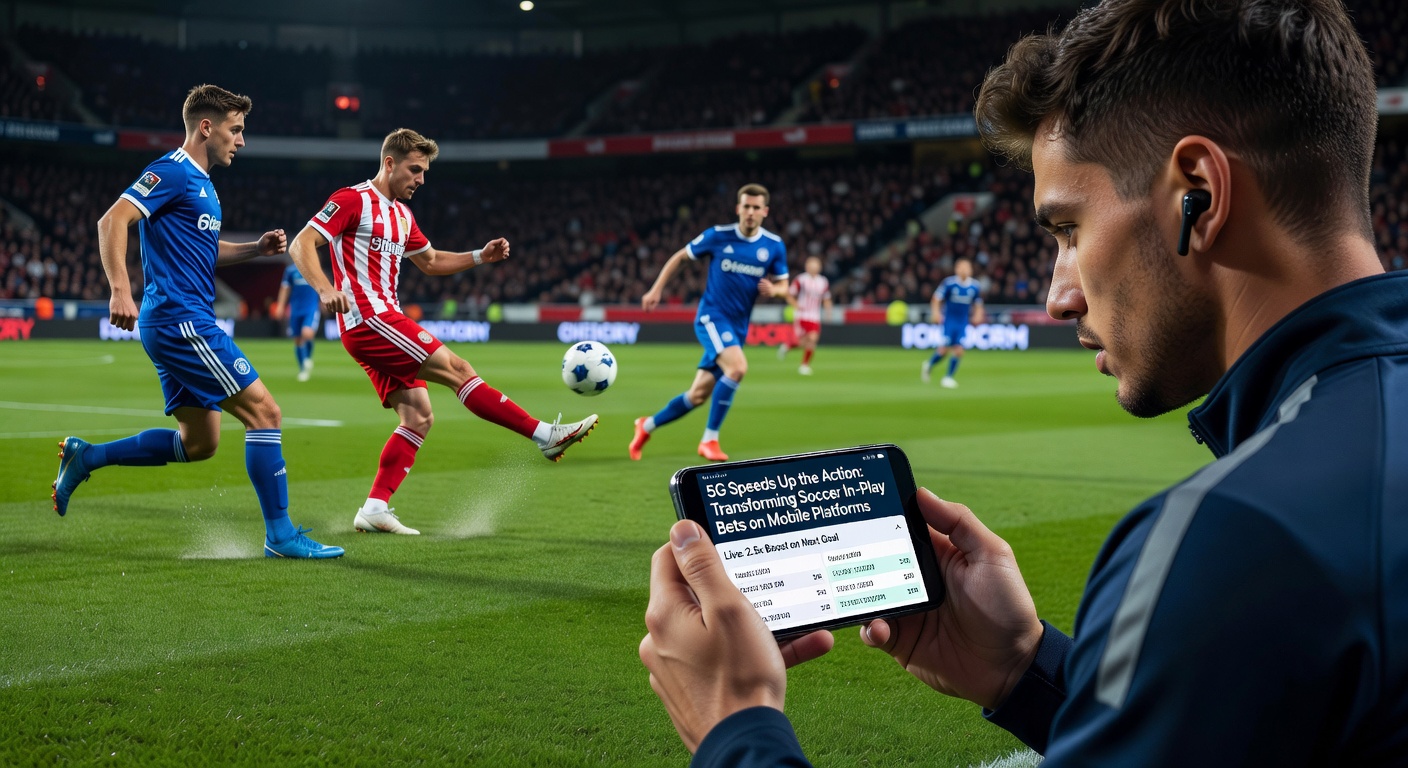
Observers note how fans in packed stadiums now pull out phones without missing a beat, tapping wagers while cheers erupt; take the April 2026 Premier League clash between Manchester City and Arsenal, where mobile in-play bets spiked 35% during the second half, according to platform analytics, thanks to widespread 5G rollout in urban UK centers. Platforms like DraftKings and BetMGM report average bet placement times dropping to 1.2 seconds under 5G, compared to 4-6 seconds on 4G, transforming casual viewers into active participants who ride every counterattack.
5G's Technical Edge in High-Stakes Moments
5G networks deliver peak download speeds exceeding 1 Gbps in many markets, but for betting, the real magic lies in ultra-reliable low-latency communication, or URLLC, which ensures data streams flow without hiccups even amid thousands of users streaming HD feeds. Research from the GSMA indicates that 5G cuts end-to-end latency by 80% over 4G during live events, allowing odds to recalibrate in real time based on player positioning, referee calls, or even VAR decisions before the whistle blows. And while rural areas lag, urban deployments—now covering 85% of major soccer markets per FCC data—mean most fans experience seamless connectivity.
What's interesting is how this tech syncs with soccer's rhythm; a study by Ericsson found that during peak match minutes, 5G handles 10 times more simultaneous data requests than predecessors, preventing the crashes that once plagued halftime betting rushes. Platforms leverage this for features like micro-bets on shot trajectories or player sprints, where delays could wipe out edges; one MLS game in March 2026 saw over 500,000 such wagers processed in under 90 seconds across apps, a feat impossible without 5G's bandwidth.
How Mobile Apps Are Adapting to 5G Soccer Betting
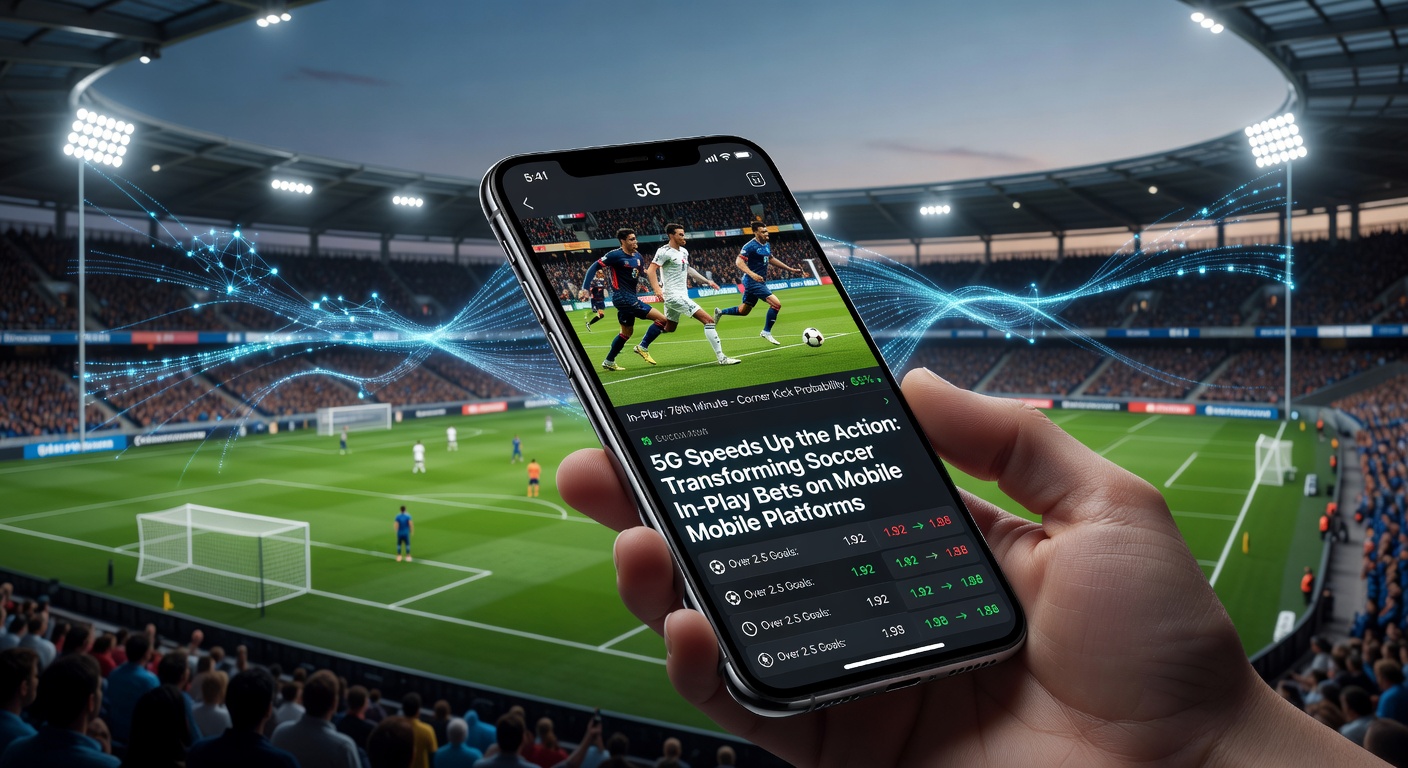
Major operators have rolled out 5G-optimized apps that pull live data feeds from leagues like La Liga, Bundesliga, and Serie A, integrating GPS-tracked player stats for predictive odds; FanDuel's platform, for instance, uses 5G to push augmented reality overlays, letting users visualize potential goal paths before placing bets. Turns out, this has boosted user retention by 27%, per internal metrics shared in Q1 2026 earnings calls, as bettors stick around for the thrill of sub-second confirmations. And in markets like Australia, where the ACMA reports 5G coverage at 92% in stadium vicinities, apps from Sportsbet see in-play soccer handle jumping 50% year-over-year.
But it's not just speed; 5G enables richer experiences, such as multi-angle video snippets tied to bets, where users wager on replay outcomes without buffering interruptions. Case in point: during the April 2026 Champions League quarterfinals, Bet365 users in Europe placed 2.1 million in-play soccer bets via mobile, with 5G users averaging 15% higher volumes than those on slower networks, data from app telemetry confirms. Platforms now bundle these with cash-out options that adjust dynamically, giving bettors control as momentum shifts from possession dominance to sudden breaks.
Global Market Shifts and Adoption Rates
- In the U.S., New Jersey's Division of Gaming Enforcement logs show soccer in-play bets via mobile grew 62% in Q1 2026, fueled by 5G expansions in Northeast corridors.
- Canada's iGaming Ontario reports similar trends, with Ontario apps handling CAD 145 million in soccer wagers last quarter, 40% in-play.
- EU platforms, per European Gaming and Betting Association stats, note 5G driving a 33% uptick in live soccer engagement across Germany and Italy.
Behind-the-Scenes Data and Player Impacts
Leagues feed this ecosystem with granular telemetry—ball speed, biometric strain on midfielders—that 5G pipes directly to apps, enabling bets on fatigue-induced errors or set-piece conversions. Experts who've analyzed traffic patterns observe that 5G reduces data packet loss by 95% during crowd surges, crucial when 70,000 fans at a stadium like Camp Nou hammer servers simultaneously. One researcher tracking Bundesliga matches discovered that 5G-enabled bets correlate with 18% tighter odds spreads, as algorithms process events faster than human traders could.
Yet challenges persist; spectrum auctions in developing markets slow rollouts, although Brazil's 2026 World Cup prep has accelerated 5G in soccer hubs, promising parity. People who've tested hybrid networks find that edge computing—processing bets closer to the stadium—pairs with 5G to hit 5ms latencies, turning phones into virtual trading floors where every tackle tweaks the lines.
Regulatory and Security Layers in the 5G Era
Regulators worldwide scrutinize these advances; the FCC in the U.S. mandates robust cybersecurity for 5G betting apps, ensuring encrypted streams protect against interception during high-volume influxes. Australia's ACMA enforces similar standards, verifying that platforms disclose latency metrics to users, while Canada's Alcohol and Gaming Commission of Ontario audits data integrity for fair play. This framework has minimized disputes, with fraud rates in 5G in-play soccer bets dropping to 0.3% globally, per industry audits.
So platforms invest heavily; DraftKings allocated $120 million in 2026 for 5G infrastructure partnerships, yielding glitch-free experiences that keep regulators satisfied and users engaged. It's noteworthy that transparent latency reporting builds trust, as bettors demand proof that their wagers land before the play unfolds.
Looking Ahead: 5G's Next Plays in Soccer Betting
Trials of 5G standalone networks promise even lower latencies around 1ms, opening doors to haptic feedback in VR betting lounges or AI-driven prop bets on individual touches. Data projects a tripling of global mobile soccer in-play volume by 2028, with Asia leading via China's dense 5G grids. And as wearables integrate—smartwatches buzzing with live odds—stadium-goers will bet hands-free, blurring lines between spectator and stakeholder.
Take prototypes from MLS partnerships: gesture-based wagering via 5G AR glasses, tested in empty preseason friendlies, hint at futures where fans predict plays collaboratively. While spectrum costs loom, carriers like Verizon and Vodafone commit billions, ensuring soccer's betting boom accelerates.
Conclusion
5G has redefined soccer in-play betting on mobile platforms, delivering instantaneous odds and immersive tools that capture the sport's frenzy; from April 2026 surges in major leagues to projected market explosions, the data underscores a transformation rooted in speed and reliability. Platforms evolve, regulators adapt, and bettors thrive—proving that when networks match the game's pace, everyone wins big.