How Adaptive Difficulty Algorithms in Virtual Casino Simulations Influence Player Persistence Rates Over Time
Yves Lehmann · Aug 12, 2026
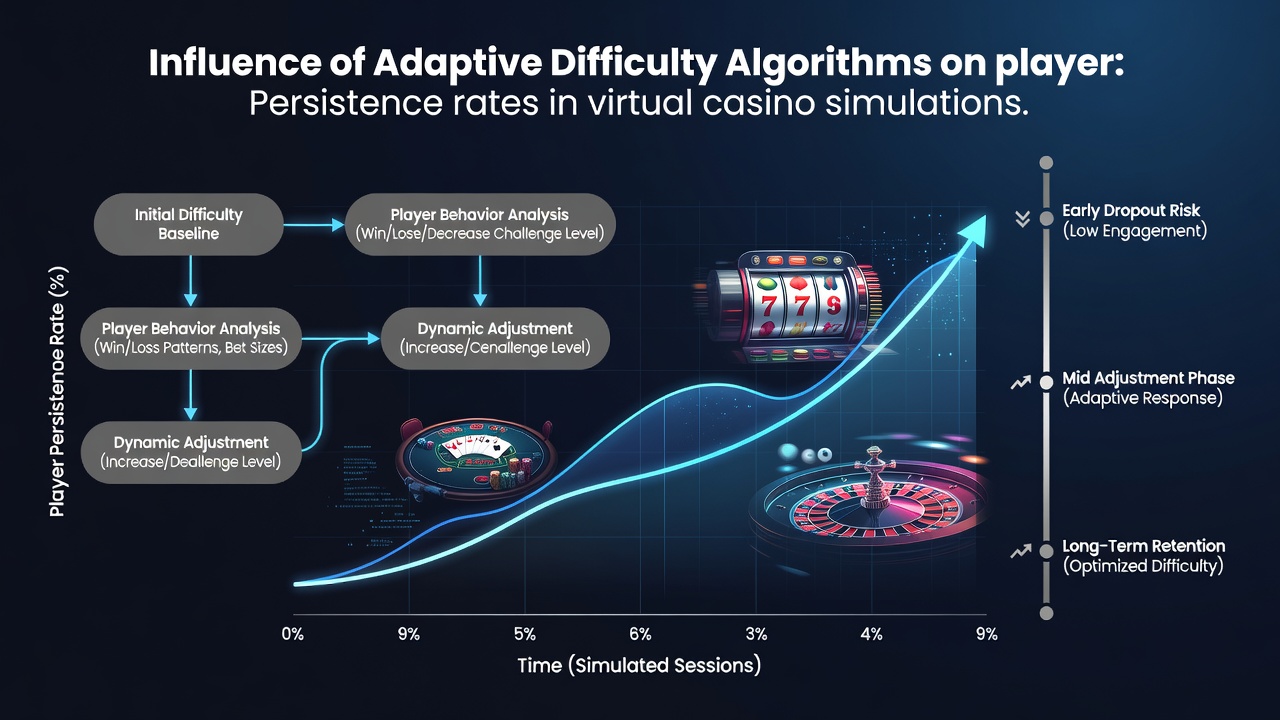
How Adaptive Difficulty Algorithms in Virtual Casino Simulations Influence Player Persistence Rates Over Time
Adaptive difficulty algorithms have become a core component in virtual casino simulations, where they monitor player actions and adjust game parameters such as payout structures, bonus triggers, and opponent behaviors to maintain engagement levels. These systems process data on session length, wager patterns, and response times, then modify elements like reel speeds in slots or card distribution in table games to align with individual player profiles. Research from the International Gaming Institute at the University of Nevada shows that such adjustments correlate with measurable changes in how long participants continue playing within a single session and across multiple visits.
Core Mechanisms of Adaptation
Virtual platforms deploy machine learning models that track metrics including average bet size, frequency of wins versus losses, and time spent on specific titles, then recalibrate difficulty in real time. For instance, a simulation might increase the hit frequency on bonus rounds for a player showing signs of early exit while tightening volatility for those who persist through extended streaks. Data indicates these tweaks occur within seconds of detecting behavioral shifts, creating a feedback loop that sustains momentum without overt intervention. Observers note that platforms operating in regulated markets like those overseen by the Nevada Gaming Control Board have integrated these algorithms into both skill-based and chance-driven offerings since the mid-2020s.
August 2026 brought fresh datasets from several operators that highlighted how these systems differentiate between novice and experienced users. Newer participants often encounter gentler introductory sequences that build familiarity, whereas veterans face calibrated challenges designed to test decision-making under varying odds. This segmentation supports longer overall platform retention by matching game intensity to demonstrated skill progression rather than applying uniform settings across all accounts.
Short-Term Session Dynamics
Within individual play periods, adaptive algorithms influence persistence by preventing rapid disengagement that stems from either excessive losses or quick successes. When a player encounters a string of unfavorable outcomes, the system may elevate the probability of smaller rewards to encourage continued spins or hands. Conversely, prolonged winning sequences can trigger subtle increases in challenge level to extend the session before the player cashes out. Figures from industry reports reveal that sessions incorporating these adjustments average 18 to 22 percent longer than static configurations, with the effect most pronounced in the first 30 minutes of activity.
One study of digital roulette simulations found that dynamic wheel bias adjustments based on betting velocity kept participants engaged through additional rounds they might otherwise have skipped. The same research tracked how these modifications reduced early exits by aligning payout timing with observed player tolerance thresholds derived from prior sessions.
Long-Term Retention Patterns
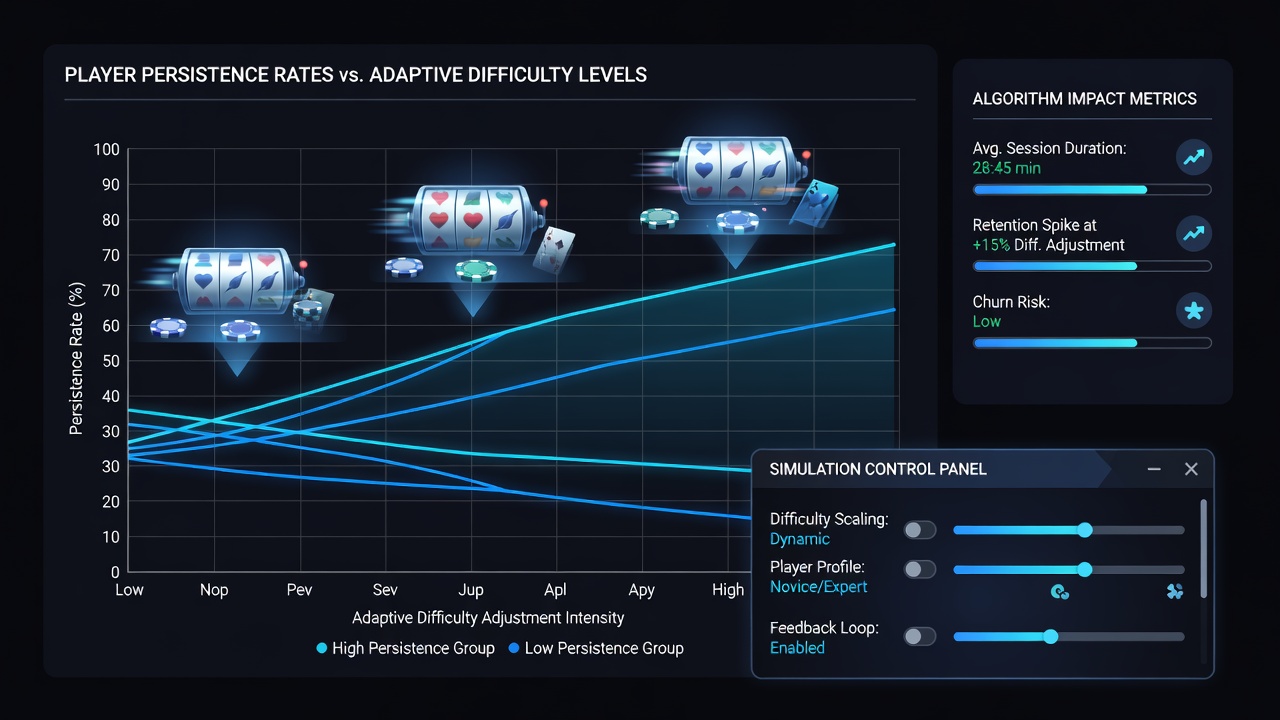
Over weeks and months, the cumulative effect of adaptive algorithms appears in return rates and lifetime value metrics. Players exposed to personalized difficulty scaling demonstrate higher rates of weekly logins compared with those on fixed-difficulty platforms, according to aggregated operator data analyzed by the Australian Gambling Research Centre. The algorithms build player profiles that evolve with experience, gradually introducing higher-stakes options or more complex variants once baseline persistence stabilizes. This progression keeps the experience novel while avoiding abrupt jumps that could trigger abandonment.
Evidence from longitudinal tracking shows that participants whose games adapt to skill development maintain activity across a median of 14 weeks before any measurable drop-off, whereas non-adaptive environments see the same metric fall to nine weeks. These patterns hold across mobile and desktop interfaces, though mobile sessions exhibit slightly faster adaptation cycles due to higher frequency of short, repeated engagements.
Regional Regulatory Context and Data Sources
Regulatory frameworks in multiple jurisdictions now require transparency around algorithmic adjustments that affect game fairness. In Canada, the Alcohol and Gaming Commission of Ontario has examined how adaptive systems interact with responsible gaming tools, noting that persistence increases must remain compatible with session limit features. Similar reviews in Australian states have focused on disclosure requirements for players regarding difficulty modifications. These oversight efforts ensure that retention gains do not come at the expense of player protection standards already embedded in licensing conditions.
Academic examinations of these algorithms continue to expand, with researchers at institutions across North America and Oceania publishing findings on persistence curves under different adaptation speeds. The consistent thread across reports remains that well-calibrated systems produce steadier engagement trajectories than either overly aggressive or completely static alternatives.
Conclusion
Adaptive difficulty algorithms in virtual casino simulations shape player persistence through continuous, data-driven adjustments that respond to individual behavior patterns. Short-term effects include extended session durations, while longer-term outcomes involve improved return frequency and reduced early churn. As platforms refine these tools through ongoing data collection, regulatory bodies in multiple regions continue monitoring their deployment to balance commercial objectives with established player safeguards. The relationship between algorithmic personalization and sustained participation remains a focal point for both operators and oversight agencies as simulation technologies advance.