Neural Mapping of Decision Fatigue in Extended Sessions of Anonymous Online Poker Cash Games
Morgan Krüger · Aug 26, 2026

Neural Mapping of Decision Fatigue in Extended Sessions of Anonymous Online Poker Cash Games
Researchers continue to examine how extended periods of anonymous online poker cash games affect cognitive performance through detailed neural mapping techniques. Data from neuroimaging studies reveal consistent patterns of reduced activity in the prefrontal cortex as sessions stretch beyond four hours, while participants maintain real-money stakes without identifiable player histories influencing their choices. These findings emerge from controlled experiments that track brain responses during continuous play on digital platforms where opponents remain unknown and tables reset rapidly. Decision fatigue appears when repeated choices deplete mental resources, and poker cash games amplify this effect because each hand requires independent evaluation of pot odds, opponent ranges, and bet sizing. Studies indicate that anonymous formats eliminate social cues or reputation tracking, which forces players to rely more heavily on working memory and pattern recognition alone. According to reports from the National Institutes of Health, prolonged engagement in such environments correlates with measurable declines in inhibitory control after approximately six hours of continuous play.Brain Regions Under Scrutiny During Prolonged Play
Neuroscientists focus on the dorsolateral prefrontal cortex and anterior cingulate cortex when mapping fatigue in poker settings. These areas handle executive function and conflict monitoring, yet activity levels drop as sessions lengthen even though monetary incentives remain constant. Functional MRI scans demonstrate that participants shift toward more impulsive betting patterns once neural efficiency declines, and this shift occurs independently of actual hand strength or stack depth.
Researchers note that dopamine signaling in the ventral striatum also changes during these extended sessions. Initial wins trigger stronger reward responses, but later decisions produce flatter activation curves even when similar positive outcomes arise. This pattern holds across multiple trials conducted in laboratory simulations designed to mirror real anonymous cash game interfaces used on major platforms in August 2026.
Evidence from Recent Neuroimaging Research
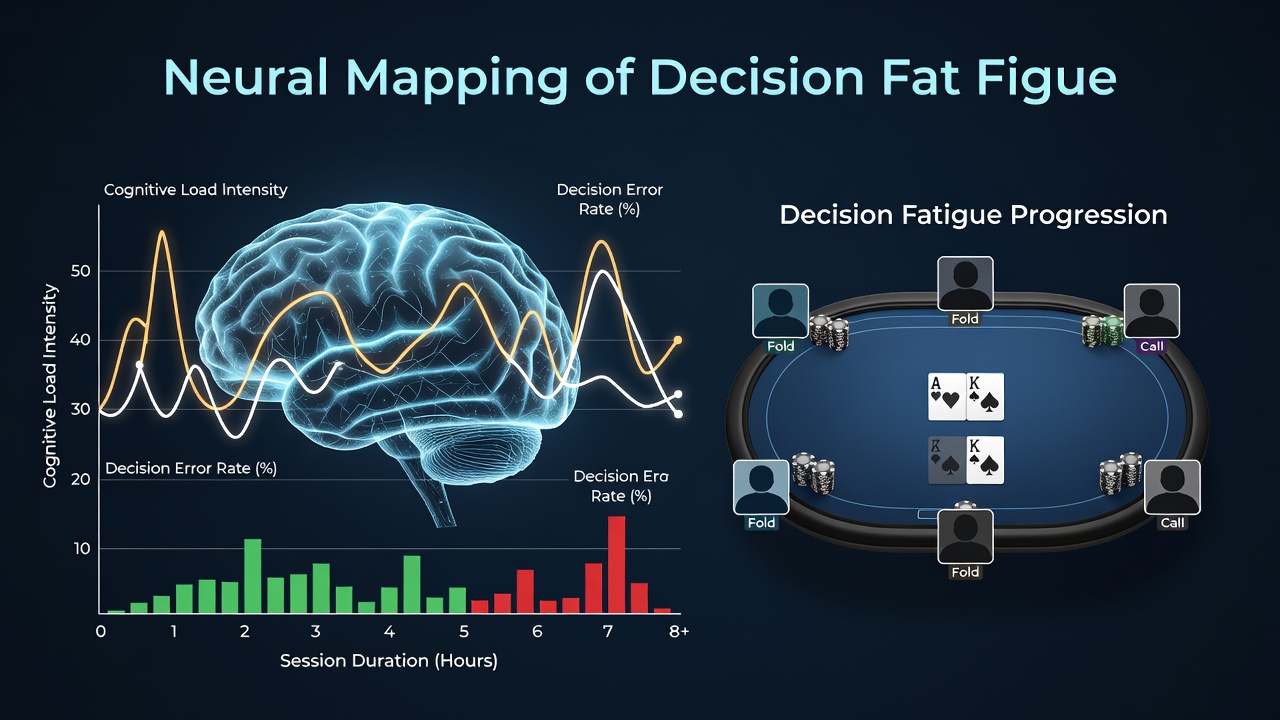
One study released in mid-2026 tracked thirty experienced online poker players through eight-hour sessions using combined EEG and fMRI protocols. Results showed progressive increases in theta wave activity in frontal regions, which researchers associate with mental fatigue and reduced strategic flexibility. Participants made statistically more suboptimal calls and folds after the four-hour mark, and error rates rose further when session length exceeded six hours.
Another project coordinated by Canadian university laboratories examined heart rate variability alongside neural data to cross-reference physiological stress markers with decision quality. Findings indicated that elevated fatigue signals preceded measurable drops in expected value calculations, particularly in high-pressure river decisions where pot sizes had grown large. These observations align with broader data on cognitive depletion published through academic channels focused on behavioral neuroscience.
Platform Design Factors and Player Retention Data
Online operators track session length metrics that indirectly reflect decision fatigue patterns. Aggregate reports from North American and European gaming associations show average cash game session durations clustering between three and five hours before noticeable drops in win rates appear for individual accounts. Anonymous tables accelerate this timeline because players cannot adjust strategies based on known tendencies, which increases cognitive demand per hand.
Regulatory filings from the Australian Communications and Media Authority highlight how continuous play features influence engagement curves in digital card rooms. While platforms do not directly measure neural activity, they record behavioral proxies such as bet sizing variance and time spent in decision windows. These metrics decline in consistency as total session time grows, and operators have begun testing interface adjustments like mandatory break prompts after fixed intervals.
Conclusion
Neural mapping continues to provide objective measures of how decision fatigue develops during extended anonymous online poker cash game sessions. Data collected through fMRI, EEG, and physiological monitoring demonstrate clear shifts in prefrontal activity and reward processing that coincide with changes in betting accuracy. As platforms evolve their features in 2026 and beyond, these research outputs offer reference points for understanding cognitive limits without relying on subjective player reports alone.